Home · Costs & Insurance
What HVAC work costs in Sandy in 2027, and how insurance pays
How much does HVAC repair or replacement cost in Sandy, and does insurance cover it?
Published national guides put common HVAC repairs commonly between about $150 and $650 depending on the part, furnace replacement on a typical home commonly between about $3,000 and $7,000 installed, and full system replacement commonly between about $5,000 and $12,000. In Sandy the number is built from the failed component, the altitude and venting details of the install, and whether the two-story load split has ever been honestly addressed. Insurance commonly covers HVAC only when a covered event caused the failure, and commonly excludes wear. The written scope after an in-person diagnosis is the number that matters.
Honest numbers first. The latest published national guides put common repairs between about $150 and $650, furnace replacement between about $3,000 and $7,000 installed, and full matched system replacement on a typical home between about $5,000 and $12,000. A Sandy system prices off its two-season duty, its altitude derating, and its duct reality, which is why the written scope follows the diagnosis and never precedes it.
Compiled from published national guides and local data; reviewed by the Dimple Dell Heating and Air research team. Last reviewed November 16, 2026.
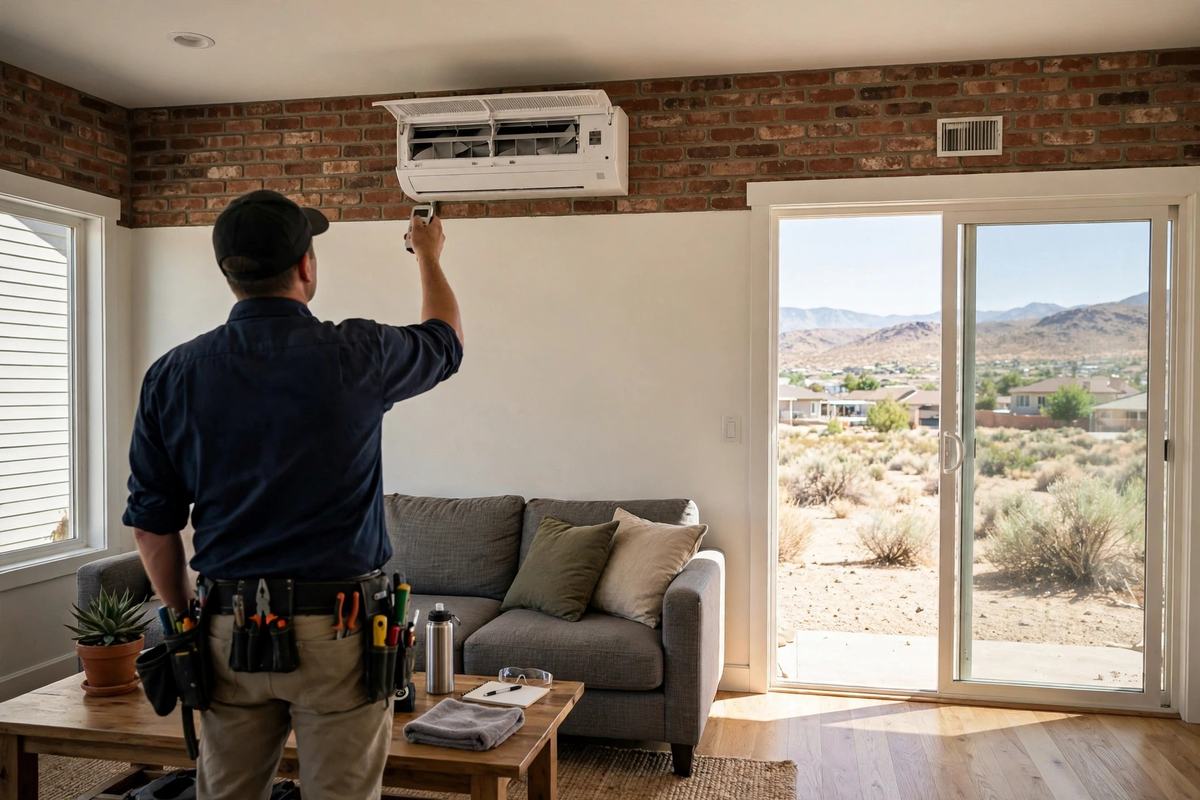
Typical cost ranges
| Job | Typical range | What moves it |
|---|---|---|
| Common repair (igniter, sensor, capacitor, controls) | $150 to $650 | The published national band for the parts that fail most across two working seasons. |
| Furnace replacement | $3,000 to $7,000 installed | Efficiency class, venting against snow and melt, and derating decide it inside the band. |
| Full matched system replacement | $5,000 to $12,000 typical home | Furnace, coil, and condenser as one matched scope; duct corrections priced as their own line. |
| Ductless mini split, single zone | Priced by the scope | Cold-climate rating is the deciding specification in a Wasatch winter, not a premium option. |
These are published national guide ranges, not quotes. Your number is the written scope after the diagnosis, with the failed part named.
How insurance pays for this work
The deductible question
Standard deductibles commonly run $500 to $2,500. The water damage from pipes frozen during a furnace outage is the classic Sandy claim; the furnace repair itself is usually excluded as wear. Document the outage timeline and the temperatures, because that file is the argument.
Request a callback
Prefer to talk later? Leave your details and an independent local pro will call you back. No charge to you, no obligation.
Dimple Dell Heating and Air is a free referral service. Submitting this form connects you with independent local contractors who provide the work.